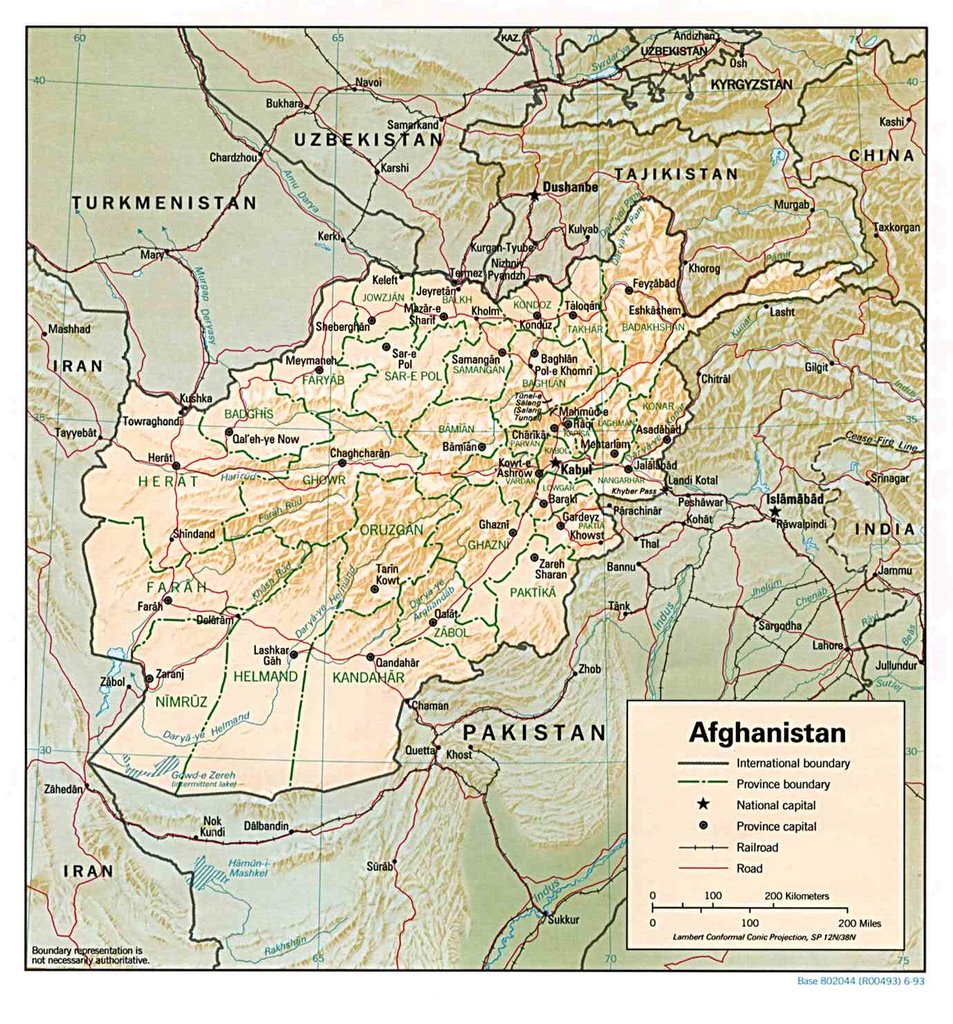
Saturday, May 24, 2008

What Afstan is all about

Naval F-35C for Canada?

This is fascinating (via Chimera at Milnet.ca):
From Jane's Defence Weekly [text subscriber only]

Canada considers F-35 carrier variant
Canada may scrap plans to buy some conventional F-35A Lightning II Joint Strike Fighter (JSF) aircraft in favour of F-35C carrier variants well suited for cold weather and Arctic operations, according to a defence industry source close to the JSF programme. Prime Minister Stephen Harper told Canadian media on 12 May that Canada would buy 65 JSF aircraft [not quite] instead of the 80 aircraft it was expected to buy under an agreement to provide funds for Production, Sustainment and Follow-on Development (PFSD) of the aircraft...

Surely the naval version will be appreciably more expensive than the Air Force F-35A as it will have shorter production run (much smaller USN requirement, RN only foreign likely sale so far) and not need the specialized carrier equipment? But remember about our CF-188s:
...many naval features were retained from the F/A-18 including the arrestor hook, the robust landing gear, and the wing-folding mechanisms. These features proved to be advantageous when operating the new CF18s from smaller airfields, especially in the Arctic...
Well, presumably having them eliminated would just have added to the cost.

By the way, there is a very interesting comment thread, still active, at this post last November on a separate F-35 for non-American buyers (this is the Douglas F-6D Missileer).

Update:
Israel submits request to buy F-35 jets

Paper warriors

Bureaucracies are the bane of ever sailor, soldier and airman throughout their entire career. Many a cold night in the middle of nowhere can be passed swapping stories about who's been screwed over the worst. It is simply accepted as part of life in the military. On the bus, off the bus.

That it should continue to happen after their death is both frustrating and outrageous.

Maybe if a few CBC executives could find it in their hearts to downgrade their hotel accommodations now and again or the Foreign Minister could find a better booking agent for his airfares the government could scrape up a few extra bucks to ensure our veterans don't have to spend their dying days worrying about the expense of their death.

BZ to the Toronto Sun's Peter Worthington who continues to fight for those who can no longer answer the call themselves.

Outside the Wire

Reporter Doug Schmidt returns to Afghanistan for a second stint reporting for Canwest and the Windsor Star.

He's also blogging again at Outside the Wire.

You can read the blogs from his first stint in 2006/2007 here.

Friday, May 23, 2008

Are the CC-177s worth it?

David Akin, at his blog, wonders about the need for the Canadian Air Force's Globemaster IIIs. A dialogue ensues at the "Comments".

Babbling adds in an e-mail to me:
I'd also mention the idea that rentals continue to be a good idea to supplement our strat-lift capacity. But they're not a good idea to actually be the entire capacity! Especially since military aircraft piloted by your own nation's crews can and will take on missions you wouldn't trust to a civilian contractor.

Does anyone think the JSS will obviate the need for civilian sea-lift?

I think your strongest point is the overuse of the C-130's as miniature strat-lifters, and the restrictions that placed upon our other capabilities. For example, the decision to go with the LAV & MGS (Stryker) platforms rather than a tracked direct fire armoured heavy (Leo) was driven to some degree by what we could carry in the back of our largest transport aircraft, the Herc. Logistic purchases aren't quite as clear-cut in terms of what saves lives, enables missions, or extends capabilities...
I would also add that we have not spent $3.4 billion on the aircraft, as the title of Mr Akin's post might make one think. That's the (very) long-term cost of buying and keeping them in service for many years, not the flyaway price.

CF's "war for talent"

The demographics are going to be difficult:
The Canadian Forces is in a domestic "war for talent'' as it attempts to boost its ranks, Canada's top general said Friday.

In an address to the Nova Scotia legislature, Gen. Rick Hillier said the military is competing to attract a shrinking demographic of "select young people'' between the ages of 18 and 29.

"We're meeting our objectives, but this is one in which we can't let up because we need to grow the Canadian Forces,'' Hillier told the audience of politicians and military officers.

The chief of defence staff conceded that while recruiting is a challenge, the Forces is meeting its goal of getting 7,000 people into regular units this year, with a goal in 2009 of more than 8,000.

He said while plenty of potential recruits are coming forward, the military has to find ways to train them quickly enough so they can be deployed to ships, and air and army units.

Hillier said there has been a problem finding enough competent recruits to work in a small number of advanced technical trades in the navy and air force.

He said 40 positions needed to be filled in the last year but only 20 suitable candidates were found.

"The numbers are tiny but they are significant in their impact,'' Hillier told reporters later. "So we are working hard ... to get out to technical colleges and get a greater profile there.''

Briefing materials obtained by The Canadian Press last month showed that attrition levels for the military, particularly for the army, are on the rise as people choose to retire or not renew their contracts.

The attrition rate for the army is 13 per cent, or nearly double the average for all three branches of the Forces.

Hillier said the military is keenly aware of the problem.

"A larger percentage of the Canadian Forces are coming to retirement age because we didn't recruit during the late '90s. ... We've got a variety of measures to keep people for as long as we can or as long as they want to stay,'' said Hillier...

Hillier said those efforts have helped keep the overall attrition rate at around eight per cent, something he maintains is "the envy of every single military force in the western world.''..
Here's an earlier post of Babbling's that deals with "the training block that is currently the CF's biggest barrier to growth".

Afstan: Things heating up in east/ANA Training

These two stories put some more flesh on the bones of parts of this post (and this one):

1) Eastern Afghanistan now a hotter zone for U.S. troops
Officials worry increased attacks are the fallout of peace deals with militants in Pakistan

2) Afghan troops ready for bulk of fight: U.S. general ["by early next year"]

Here's some earlier optimism, from ISAF's commander; I suspect a dash of salt may be needed.

A lack of transparency, and crappy public communications?

No shit, Sherlock.

(Still, good on Manley for trying to shine a light on it.)

Thursday, May 22, 2008

Afstan overview: US doing well in east but country's future still murky

Excerpts from a good (long) piece in The Economist:
...events at Charbaran were important in one respect: in a counter-insurgency strategy that is summed up by the catchphrase “clear-hold-build”, Afghan security forces, backed up by American power, are showing that they can hold areas cleared by the Americans. In a war that has often gone from bad to worse, this is good news for NATO...

General Dan McNeill, the American commander of the NATO-led International Security Assistance Force (ISAF), notes that his mission is seriously “under-resourced”. Yet he suggests that the Afghan army and police will become strong enough by 2011 to take the lead in most areas, allowing NATO to start reducing its forces and to take more of an advisory and support role—providing, for example, embedded advisers who can organise air support and medical evacuations.

The Afghan army is the most respected institution in the country. Western trainers say that, in contrast with Iraqi forces, Afghan soldiers have little fear of closing with the enemy; if anything, the problem is holding them back so that Western aircraft can have a clear shot at insurgents. Thanks to a beefed-up training programme, paid for largely by America, the Afghan army has grown to more than 50,000 troops; it has started conducting large-scale operations alone and is building up an air force. By 2010 it is due to expand to 80,000 men. The often corrupt Afghan police are being retrained en masse.

Nobody thinks these forces, even at full strength, will be anywhere near large enough. Afghanistan, though bigger than Iraq geographically and with a roughly comparable population, has less than a third as many security forces employed, whether Western or indigenous. Still, Afghan forces are due to take charge of the capital, Kabul, in the coming months. In Nangarhar province, the gateway to Pakistan, where al-Qaeda had several camps in Taliban times, the Afghan army and police are doing most of the security work in Jalalabad and other main towns, while American forces try to secure the borders...

American commanders feel Nangarhar is ripe for investment in roads, airports and electricity generation. Their confidence contrasts sharply with the pleas for help from the embattled Canadians in Kandahar and the defensiveness of the British in Helmand [emphasis added]. Perhaps the most striking evidence of the pacification of Jalalabad is the sight of American Humvees waiting patiently at traffic lights.

Green fields, and purple

Detailed data on security are hard to come by in Afghanistan. Even the UN declines formally to release its “accessibility map”, which these days depicts a country in two halves: a relatively quiet north and west and a restive south and east where, with few exceptions, the risk to humanitarian workers is deemed to be either “high” or “extreme”.

Few dispute that the American-controlled east of the country is faring better than the south [emphasis added], where other NATO allies are in charge. Although America accounts for more than half the foreign forces in Afghanistan (divided roughly evenly between ISAF and its own counter-terrorist mission, Operation Enduring Freedom), it has suffered fewer deaths than its allies this year.

The differences between the east and the south are most apparent from the military helicopters that skim the treetops at breakneck speed. This year the fields in Nangarhar and Kunar are green with wheat. Helmand and Kandahar, though, show the pink and purple patchwork of illegal opium poppies. Insecure areas provide the most fertile ground for poppies, and southern Afghanistan is the most insecure. The opium and heroin trade, in turn, finances the insurgency and corrupts the government.

Since Europeans cannot or will not commit more troops against the Taliban, the war effort in the south shows signs of being re-Americanised. Last year saw a mini-surge, with an extra American brigade deployed to Afghanistan when five more were sent to Iraq. This year an additional marine expeditionary unit—a 2,400-strong force with more air power than the whole 7,500-strong British task-force—has been deployed to the south for seven months to disrupt arms- and drugs-smuggling routes in Taliban strongholds.

There is talk of sending two more American brigades, about 7,000 soldiers, and of placing the southern region under permanent American command [not happening]. This might improve things. At present, each national command has different priorities and allied units are rotated every six months, compared with 15 for the Americans (to be reduced to 12 months later this year). General McNeill, who took over as ISAF commander in February last year, says he is “on my fourth commander in the north, the second in the east, the third in the capital, the third in the south and the third in the west.” The military effort, he says, needs more consistency...

There are underlying reasons why the south is more troublesome than the east: its tribal structures are weaker, making it harder for elders to make deals stick; it is more remote from Kabul and the main trade routes; the population is less educated and more xenophobic; and it is the ideological heartland of the Taliban. That said, a growing number of British officers grudgingly recognise that America is learning the lessons of irregular warfare, drawn mainly from British colonial experience, better than the modern British army.

After much trial and error, the allies more or less agree on the tenets of counter-insurgency. The objective is not so much to kill the enemy as to protect the population and extend the authority of the Afghan government; development, dialogue, amnesties and reconciliation are important tools for weakening the insurgents...

...The Americans, say the British, have the advantage of time and resources: they have been in the east ever since the fall of the Taliban in 2001, whereas the British only got to Helmand in 2006. More important, the Americans have more forces at their disposal. They have been able to deploy right up to the border with Pakistan, whereas the British and Canadians are more thinly spread and have surrendered the southern frontier, and much of the countryside as well, to the insurgents [emphasis added].

America's slush fund

Probably the most striking difference between the Americans and the British is in their use of money. Britain channels most of its economic aid through the government in Kabul in the hope of building up the bureaucracy there, whereas America finances private contractors to carry out big projects, such as road construction and power stations.

For American commanders, “money is bullets.” They have at their disposal a slush fund, worth hundreds of millions of dollars, known as the Commander's Emergency Response Programme (CERP)...

In Kunar province, one of the most turbulent in the American sector, valleys that last year proved deadly to American forces are being pacified. Troops will clear an area of insurgents and seek to stabilise it by bringing in a new road in consultation with village elders, who are expected to do their bit to keep bad elements out. Sometimes a new school will be set up in a hostile village as the precursor to the arrival of American and Afghan government forces.

Roads are especially favoured [emphasis added], because they allow remote villages to sell their produce and enable Afghan forces to move quickly to trouble spots. The recent opening of a new road linking the Pech valley to the provincial capital, Asadabad, resulted in a quadrupling of live births in the town's hospital as villagers were able to get medical help. The Americans unashamedly outbid the insurgents: if the rebels pay $5 a day for a fighter, the Americans will offer $5.50 a day for road labourers. “Where the road ends the insurgents begin,” says one American officer [we're paying attention to roads too]...

...The Americans are more deeply committed to winning in Afghanistan—militarily, economically and in terms of mental effort—than any of their allies [emphasis added]. They have rewritten their counter-insurgency doctrine, and incorporated all manner of civilian functions—anthropologists, political scientists and agricultural experts—into their ranks. By serving the longest tours, Americans learn faster. Their soldiers may yet end up paying the cost in terms of mental health. But for the moment America sees itself at war, while Britain is still engaged in an optional operation.

The enemy within

The most serious problem in Afghanistan, however, will not be solved by new military tactics or command structures. It is the weakness of the Afghan government. Corruption is rampant, from the lowly airport security guard demanding bribes from foreign travellers to government officials who occupy gaudy houses known as “narcotechture”...

Allied soldiers will continue to fight, build roads and host meetings with tribal elders in the hope of isolating the insurgents. But in the longer term, unless the Kabul government can be made to work more effectively, their efforts and sacrifices may be in vain. As Ibn Qutayba put it a millennium ago, there can be no lasting government without “justice and good administration”. Even American money and power will struggle to achieve that.

Afstan: CF's last command in the South?/ Big US "Oops"

Next commands in Regional Command South to be twelve months each instead of nine (but see the end of the post). Since we're scheduled out in 2011 this will be our last time in charge. But it looks like the diplomacy to get US permanent command in RC South did not succeed:
WASHINGTON -- The Defense Department said Wednesday [May 21] it has shelved a plan to take greater control in parts of Afghanistan where NATO is in charge after the Dutch and British agreed to extend their commands.

Pentagon spokesman Geoff Morrell said the Netherlands and Britain will stay in control in southern Afghanistan for a full year, rather than in months, as the military alliance fights a stubborn Taliban insurgency.

The European allies agreed to the new arrangement in recent conversations with Defense Secretary Robert Gates, Morrell said.

"I think we're trying to create a situation in which ... by the command serving longer, there'll be greater stability and continuity to our operations" in southern Afghanistan, Morrell said. The U.S. raised the idea and allies signed on, he said.

The U.S. has complained that changing commands every nine months and rotating troops even more frequently do not provide the necessary continuity for an effective fight against the insurgency, particularly in Afghanistan's volatile south.

In recent months, the Pentagon suggested giving the U.S. military more authority in those areas now under NATO command. U.S. control is now limited to eastern Afghanistan...

Asked if the new agreement ends discussion that one country -- likely the U.S. -- take charge of operations in the south, Morrell said it addresses the issue there for at least the next two and a half years.

A NATO official said Wednesday that while the U.S. floated the idea of controlling the south, the Pentagon did not press hard for the plan. The official, who spoke on condition of anonymity because he was not involved in the Pentagon's announcement, said there were no real disputes over the plan...

Morrell dismissed the suggestion that the new agreement for longer European commands was a compromise. But, he added, "We work with allies in (southern Afghanistan) and throughout the country, and we take their considerations into account."

One unresolved issue, Morrell said, is that two U.S. commanders will continue to control troops in Afghanistan. U.S. Central Command is responsible for operations in Afghanistan, but Gen. John Craddock is the head of U.S. European Command and is NATO's top military commander.

The agreement also does not extend the tours of allied troops serving in Afghanistan [emphasis added]. Morrell said the allies will likely still serve three- to six-month tours -- a practice that U.S. commanders have suggested can be disruptive.

Under the new agreement, the Canadians, who now control the south, will leave in November and the Dutch will assume command. In November 2009 the British would take over, and the U.S. is on tap to take command of the region in November 2010 [emphasis added]...
More on the vexed question of mixed command chains for US forces:
...
Q But it doesn't get to what General McNeill and General Craddock are talking about, which is getting one nation in charge and remaining in charge, as you have in the North and in other areas.

MR. MORRELL: Well, General McNeill and General Craddock are certainly entitled to their opinions in this. But we work with allies in RC South and throughout the country. And we take their considerations into account.

Yeah.

Q But this does mean or -- does this mean that for at least the first two years of General Petraeus's expected tenure at CENTCOM, that he won't have command of this key region of Afghanistan, that that will be under EUCOM-NATO-ISAF, or NATO-ISAF?[emphasis added]

MR. MORRELL: I think it is as I've just explained it. It -- for the next two and a half years, the Canadians, the Dutch and the British will share command of RC South and that the latter two nations, the Dutch and the Brits -- and the British, will have that command for a year instead of nine months. And they will be followed in that command by the United States. That's all I can share with you on that...[emphasis added]
As far as I can see our media have ignored this significant development. Maybe they'll notice this rather large "Oops!" of a mis-speak:
The Pentagon says the agreement on command of NATO operations in southern Afghanistan, which it announced Wednesday, is not finalized. But officials still hope the plan will be approved. VOA's Al Pessin reports from the Pentagon.

Pentagon Press Secretary Geoff Morrell says he was "too emphatic" when he announced the agreement Wednesday. He had said the United States reached agreement with the Netherlands and Britain for those countries to each command the southern Afghanistan effort for a year, starting in November when Canada ends its rotation.

On Thursday [May 22], he told reporters it is not "a done deal." Rather, Morrell says Defense Secretary Robert Gates and his British and Dutch counterparts have agreed on the plan, but "it still needs to be approved by the Dutch and British governments," and by the NATO alliance [emphasis added]. He said he does not see any reason for the plan not to be approved...

...the United States will not be in command in the key area until more than two years into the expected tenure of General David Petraeus as the head of U.S. Central Command. The command oversees all U.S. military operations in the Middle East and Central Asia, except for the part of the Afghan operation that is run by NATO. Some analysts had hoped General Petraeus might be given more authority in Afghanistan, in order to apply the counterinsurgency experience he gained as commander in Iraq...

Wednesday, May 21, 2008

Golden Hawk Sabre to fly again

How times change:
The Sabre was the RCAF's last fighter armed with guns alone. 1184 Sabres [emphasis added!!!] flew with various units from 1950 until 1970, in Canada and Europe...[Update: Photos added]

http://www.airforce.forces.gc.ca/site/equip/images/historic_gallery/wallpaper/sabre.jpg

Now we'll have this one:
Aviation took off in Canada almost 100 years ago when the Silver Dart rose from frozen Bras d'Or Lake near Baddeck, N.S.

The Feb. 23, 1909, flight was the first controlled, powered flight by a heavier- than-air machine in Canada.

The kite-like craft was built by the Aerial Experiment Association, led by Alexander Graham Bell, who maintained a summer home in Baddeck.

Fifty years later, an aerobatic team known as the Golden Hawks was formed to celebrate the anniversary of the first flight, along with the 35th anniversary of the Royal Canadian Air Force.

The team flew gold-coloured F-86 Sabre jets [more here from the Canada Aviation Museum] and from 1959 to 1963, they were a fixture at airshows. The team was supposed to fly for only one year, but its popularity kept it going for three more, until budget cuts sealed its fate.

http://www.airforce.forces.gc.ca/site/equip/images/historic_gallery/wallpaper/ghawk2.jpg

Now, Canadian aviation history is being revisited in the Vintage Wings of Canada hangar at the Gatineau airport.

To mark Canada's centenary of flight, along with the 50th anniversary of the Golden Hawks, Vintage Wings technicians and volunteers are re-creating a Golden Hawk F-86.

The fighter, christened Hawk One, like the organization formed to bring it to life, will be a part of air shows and flying demonstrations across Canada throughout 2009.

Project leader Lt.-Col. Steve Will, former leader of the Snowbirds aerobatic team and a CF-18 squadron commander, credits Tim Leslie with the idea of resurrecting a Sabre as a centennial project.

Mr. Leslie is a former military pilot and now a test pilot with the National Research Council. He is also vice-president and chief of operations at Vintage Wings, which was created by entrepreneur and aviation enthusiast Michael Potter to help educate Canadians about the country's flying heritage.

Mr. Leslie and Lt.-Col. Will discussed the idea for months as the concept evolved.

"Once plans were firmed up, I broached the idea to Mike during a dinner and we reached a handshake agreement over a bowl of mushroom soup," said Lt.-Col. Will.

Mr. Potter, who never envisioned adding a jet to his collection, said Hawk One "is a very special mission, a very specific mission."

"The idea was first brought to me to mark the centenary of flight in Canada and, as well, to pay tribute to the Canadians who flew Sabres -- while they are still with us," he said.

Vintage Wings became the lead sponsor of Hawk One.

"We are providing the aircraft and it will fly as a Vintage Wings aircraft, but will be leased to Hawk One for $1," Mr. Potter said.

He said the Vintage Wings technical team, headed by maintenance manager Andrej Janik, is still looking for volunteers with experience working on Sabres.

Those interested can check the volunteer page at www.vintagewings.ca

The Sabre was acquired in 2007 from an owner in the United States. After it was flown to the Gatineau airport, the jet was taken apart to begin its reincarnation as a Golden Hawk.

Hawk One will come together as the type of Sabre built by Canadair of Montreal -- long since absorbed by transportation giant Bombardier.

The fuselage and engine are Canadian, but the wings are from a U.S. F-86-F, because they were used to replace the original wings, which were damaged in an accident.

Civilian and military personnel have donated hundreds of hours to rebuilding the aircraft, Mr. Potter said.

Military experts have helped with such things as the ejection seat system, because only they have the expertise, he said, stressing that the work is done on the individuals' own time.

Mr. Potter said he expects the Sabre to be test flown by late summer or early fall.

On Feb. 23, 2009, Hawk One is to fly over Baddeck to mark the anniversary of the first flight and the beginning of centennial observances.

Canadian astronaut Chris Hadfield, one of five pilots who will fly Hawk One, hopes to be at the controls.

He also intends to fly the Sabre during Canada Day celebrations in Ottawa and at the Canadian National Exhibition airshow in Toronto...

The project has a proposed budget of $2.5 million, in cash and donated services. The task of raising the funds is in the hands of a team led by Bill Coyle, who can be reached at coyleb@rogers.com.

Flying a jet fighter is expensive. The fuel bill alone for 2009's estimated 200 hours of flying will be at least $300,000.

"We're more than half way to our fundraising goal, thanks to the efforts of Bill and his team," Lt.-Col. Will said.

"(The year) 2009 is an extremely significant year for Canadian aviation," Mr. Leslie said.

"It will take a lot of time, money, and effort to properly recognize the importance of the first powered flight in Canada ... as well as to recognize the many successes Canada has enjoyed in aviation during the past 100 years," he said.

"I certainly hope others will share in Michael Potter's passion to recognize this historic event and support this endeavour."

Hawk One will make several appearances with the Snowbirds.

"We hope to have a heritage flight -- with the Snowbirds, Hawk One, the demonstration F-18 Hornet and a Tutor painted in Centennaires colours," Lt.-Col. Will said. The Golden Centennaires team was formed in 1967 to mark Canada's centennial.

Hawk One also will make solo appearances between big airshows...
Disclosure: I was born on the day the Sabre first flew (as the XP-86); been a fan ever since :).

Update: CL-13 Sabre Mk. V in Golden Hawk livrey at the Atlantic Canada Aviation Museum (h/t to Jack MacLeod).

Why has our new fighter requirement been reduced to 65?

We had been planning on 80:
...
Canada's participation in the F-35 program has been based on the planned procurement of 80 aircraft [F-35 the likely, but not certain, choice], the number of upgraded Boeing CF-18s the Canadian Forces will operate until they replaced by new fighters in 2017-20. Harper said fewer aircraft are required because the new fighter will have significantly greater capability than the CF-18s...
In 2007 $3.8 billion--flyaway cost only--was allocated for the Hornets' replacements.

Now Lockheed Martin is apparently offering a flyaway price of $63 million (the author, Bill Sweetman, is Editor in Chief of Defense Technology International, Aviation Week Group):
A potentially important report from Australian Aviation magazine: Lockheed Martin will indeed offer a fixed price for international JSF partners. According to the magazine, Lockheed Martin business development VP George Standridge told Australian journalists touring Fort Worth that the price - to be set later this year and offered with US approval - would be around $63 million in 2008 dollars. This is a basic flyaway price, typically a fraction of the total acquisition cost.

A fixed price has also been offered in Norway, according to Standridge, where the Gripen team has been pushing hard on the pricing issue. (There's enough of the existing Gripen in the NG, together with an off-the-shelf engine, to permit them to offer a firm price.)

The price is higher than the estimated average F-35A price across the program - $51 to $57 million in 2008 dollars - but lower than the likely cost of low-rate initial production aircraft. The offer's intended to give customers an incentive not to slide their purchases to the right, into later and cheaper production years. Give us a firm order now, Lockheed Martin is saying, and we'll share the benefits with you.

One open question: since the cost of a JSF in 2015 or later is not known, who eats the difference if it's much higher than today's estimate - as history suggests that it will be, whatever the program bosses say? It's a big gamble for Lockheed Martin, but if it's underwritten by the Pentagon it's a subsidy - and observers of the tanker deal, and the Boeing-versus-Airbus war generally, will note that the US hates subsidies.
At an F-35 flyaway price above of $63 million, 65 would cost us $4.1 billion. Our allocation has been $3.8 billion Has the number been reduced to meet the new price (roughly)?

But, in any event, that price sure looks low--and how capable will export F-35s be?

Update: More on rising military aircraft costs generally.

Afghan/Pak potpourri

This and that, seems to be a bit of diplo spat between UK and US; check the comments here and here at Milnet.ca. Meanwhile, domestic politics:
Rae disagrees with Dion on Afghanistan

Monday, May 19, 2008

"Taliban 'losing momentum'"

Just read it. Good on Rosie DiManno (and good on the Toronto Star for employing her):
Canadian UN official says most militants are looking for a way out of war they cannot win...
Unless we, and others, simply lose our nerve.

Update:A broader perspective in the International Herald Tribune:
Seesaw Afghan war strains ties among allies
Though I think the reporter, Carlotta Gall (check the links here), should be taken with a grain of rice.

CC-177 delivers aid for Burma, via Bangkok

Let's just hope it gets there (the aid that is).

Update: Now these:
Canadian cargo plane to deliver helicopters to Myanmar
Upperdate: Oops!
CYCLONE AID: C-17S NOT AVAILABLE
Bernier's plane pledge catches Ottawa off guard

Joint Support Ship problems: No surprise

Only to be expected:
The Canadian navy's $2.9-billion project [h/t for link to Spotlight on Military News and International Affairs] to replace its aging supply ships has run aground, with defence and industry officials concluding that the vessels can't be bought with the amount of money the Conservative government is providing.

Defence Department representatives have met with Treasury Board to ask for more money for the Joint Support Ship project, but at this point, it is unclear whether additional funds will be approved.

The JSS project, as it is called, was announced in Halifax in June 2006 by Public Works Minister Michael Fortier and then-defence minister Gordon O'Connor. The new vessels are to replace the aging supply ships, which are considered vital to supporting destroyers and frigates for long periods at sea.

The project is to acquire three new vessels as well as hire a company to conduct in-service support for the ships over a 20-year period...

The $2.1 billion set aside for buying three Joint Support Ships is not enough, defence officials confirm. They point out that part of the problem is the new vessels would conduct missions far beyond the scope of re-supplying warships at sea, the role now done by the decades-old Protecteur-class ships.

Besides supplying ships, the JSS will have to carry army vehicles, a command centre and a small hospital, as well as other facilities to support ground troops on shore.

There is no similar type of ship in the world, as most navies use two types of vessels to perform the distinct roles [emphasis added].

Defence officials have heard from industry that the money set aside by the government might be enough for two ships, not three. A minimum of three ships are needed because of the size of the territory covered by the navy and the fact that, at times, one ship could be sidelined for maintenance...

The first ship is supposed to be delivered sometime in 2012, but it's unclear at this point whether that schedule will be kept...

The new ships will be around 200 metres in length and have a displacement of 28,000 metric tonnes.

Defence chief Gen. Rick Hillier views the ships as key to the future of the Canadian Forces, not just to support the navy in its missions. He has said the JSS would be used to provide support to international operations for the other services as well.

"The ships will provide the vital lifeline of supply and support to other Canadian navy ships as well as to army and air force assets in certain deployed operations," Gen. Hillier has said [more on the latter type of vessel, the "landing" or "amphibious" ship].

"A key component of the Canadian Forces transformation, the ships will help build a truly 'joint' navy, army and air force capability."
These are vessels designed to do too many things and even more costly because of the insistence they be built completely in Canada. As I wrote at the preceding link almost two years ago:
Moreover, there is a lot of doubt how capable Canadian shipyards (Davie in Quebec may be the only one) are of building a ship as complex as the JSS--especially on time and on budget. It might well make a lot more sense to build less complex AORs [ships that supply other ships at sea] here and simply have Amphibious Ship(s) built abroad.
The Aussies are taking a different approach with their new big honking ships--a foreign design, Spanish, with the hulls built in Spain and then fitted out in Australia. A lot of local work but not the whole shebang.

Update: A topic thread at Milnet.ca. And a post by David Pugliese of the Ottawa Citizen that, I think, says much that I did just above. Funny it took Mr Pugliese so long to make the point.

Upperdate: Meanwhile, another "oh dear!"

The navy’s sole East Coast supply ship is experiencing more leaky boiler problems.

HMCS Preserver, which underwent repairs to both its boilers two years ago, will be docked this summer for more boiler work.

Technicians will replace as many as 150 tubes in the generating bank of the warship’s main port boiler.

"It’s a 40-year-old piece of kit," said Ray Aube, the supervisor of mechanical engineering at Fleet Maintenance Facility Cape Scott in Halifax...

Saturday, May 17, 2008

The final chapter:"Canada First Defence Strategy"

Actually a very short one. At last the words of the MND from Halifax, May 12 (h/t to milnewstbay):
...
The Canada First Defence Strategy will ensure that our military is well positioned to defend us at home, and protect our interests and values abroad – today and into the future.
Now for something completely different.

This is the sort of defence statement...

...the Conservative government seems incapable of making. Excerpts from a speech by the Australian parliamentary secretary for defence procurement; I urge you to read the whole thing--and compare it with our government's pathetic efforts (more here). Some observations follow.
...
Firstly some comments about the context in which the budget has been framed.

The government has outlined three main priorities for defence in 2008/09. They are:

1. Operations, including United Nations peacekeeping, regional assistance missions, border protection and domestic security operations;

2. The new defence White Paper, which will lead to clear policy guidance for the defence portfolio [note all the details at the link about how the paper will be done];

3. Efficient and effective administration through defence reform.

With these priorities, the government is seeking to ensure that our strategic objectives are aligned with our capability program and that this is appropriately funded...

Budget Overview

In 2008/09, the Government will invest $21.76 billion in the Australian Defence Force (ADF) to ensure that it is ready to meet the challenges it faces. This represents about 1.8 per cent of GDP.

The Defence Materiel Organisation part of the Defence Budget is equal to $9.6 billion in 2008/09.

Some observers were expecting these figures to be higher. I will explain shortly why they fell short of some expectations. It does not mean any weakening of the Government’s resolve to build defence funding over the forward estimates.

However, it is important to note that this is an increase in the Defence Budget of 7.3 per cent over the 2007/08 forecast outcome of $20.28 billion.

The Government will support Defence by providing real growth of 4 per cent on average over the forward estimates out to 2011/12.

In addition, the Government has renewed its commitment for real growth in the Defence budget at an average of three per cent in real terms every year to 2017-18 – an additional two years funding then previously announced...

ADF Operations

ADF Operations are undoubtedly the ‘core business’ of Defence.

The Budget includes $1.036bn in 2008-09 for our major overseas operations. This commitment includes additional funding of over $668m in 2008/09 for overseas operations in Afghanistan, Iraq, Timor-Leste and the Solomon Islands.

The Government has allocated $618.9 million on Operation Slipper in Afghanistan during 2008/09. This will allow the ADF to undertake reconstruction and community based projects including support through combat patrols, reconnaissance and surveillance in the Oruzgan province.

Over the next 12 months the Reconstruction Task Force will transition into a Mentoring and Reconstruction Task Force with the inclusion of an Operational Mentoring and Liaison team. This new team will help assist Afghan forces in the province to carry out more security and reconstruction tasks.

The Special Operations Task Group in Oruzgan and the Air Force at Kandahar Airfield will also continue their important work...

Providing Clear Policy Guidance

As I have stated the Government is committed to providing clear policy guidance to Defence so that our strategic aims are better aligned with our capability needs.

The White Paper, along with the associated Force Structure Review, Companion Reviews and Savings Program will provide Defence with a firm foundation for the future.

The shape and capability of our forces will be assessed by the Force Structure Review and will take a top down approach to analysing the force structure priorities out to 2030 [emphasis added].

The review will take into account the strategic and security environment and potential tasks for our military to determine the joint capabilities needed and develop options for force structure and capability [will any Canadian government dare take on something so fraught with stepping on the services' toes?--see the latter part of this post]...

Defence International Engagement and Cooperation

The 2008-09 Budget also provides $85 million for military cooperation with Australia’s allies, friends and partners around the world.

In 2008-09, Australia will progress practical initiatives designed to enhance defence cooperation in the areas of defence trade, joint training, interoperability, communications and intelligence collaboration with the United States [can you imagine our government highlighting "interoperability" (Google deeply and one finds this) and "intelligence collaboration" with the, gasp, Americans? Hell, the government is even reluctant to acknowledge cooperation on a Civil Assistance Plan].

The Government will continue to build on the strong defence and security relationship we have with Japan. This will include strategic discussions, high-level visits, ship visits, educational exchanges and working-level exchanges on issues such as peacekeeping, counter-terrorism and disaster relief.

In 2008-09, we will seek to boost regional security cooperation through discussions with our neighbours. We will commit $26 million to defence cooperation in Southeast Asia for extensive training and education of regional militaries and cooperation in counterterrorism exercises.

In the Pacific, Defence will focus on building stability...

Defence Procurement and Sustainment Review

As many of you would be aware on 7 May I announced the Defence Procurement and Sustainment Review which will be conducted by David Mortimer.

I just wanted to outline some of the rationale behind this Review.

The Review is intended to examine the effectiveness of reforms to date and also develop a program of ongoing reforms.

One area that I am keen to see developed is a series of reforms that will move DMO further towards a more businesslike and commercial operation. I believe this is essential if we are to achieve a more effective and efficient defence procurement process...
Surely the Canadian Parliament and people deserve no less. And that's not even the minister speaking.

A few comments. Australia's population is 20.5 million; ours is 33 million. Yet the Aussies' 2008-09 defence budget is C$20.6 billion (A$=C$.95). Here's ours (note that capital expenditure is actually down):

Voted and Statutory Items Displayed in the Main Estimates


Vote or
Statutory Item
($Thousands)

Truncated Vote or Statutory Wording

2008-2009
Main Estimates

2007-2008
Main Estimates

1

Operating expenditures

13,519,620

11,848,854

5

Capital expenditures

3,356,705

3,592,868

10

Grants and contributions

192,396

210,451

(S)

Minister of National Defence salary and motor car allowance

76

75

(S)

Payments under the Supplementary Retirement Benefits Acts

6,796

7,020

(S)

Payments under Parts I-IV of the Defence Services Pension Continuation Act (R.S., 1970 c. D-3)

1,493

1,550

(S)

Payments to dependants of certain members of the Royal Canadian Air Force killed while serving as instructors under the British Commonwealth Air Training Plan (Appropriation Act No. 4, 1968)

82

90

(S)

Contributions to employee benefit plans - Members of the Military

938,132

957,396

(S)

Contributions to employee benefit plans

278,456

263,300


Total Department

18,293,756

16,881,605

The Aussies' is 1.8 per cent of GDP; ours is under 1.2 per cent (2007 GDP of $1.558 Trillion will grow somewhat; do the math). "Canada spends $558 per capita on defence...Australia $808."

To repeat from above (yes, those long-term commitments are hardly solid; but I'd put more faith in Aussie governments of either party keeping them than in our parties):
The Government will support Defence by providing real growth of 4 per cent on average over the forward estimates out to 2011/12.

In addition, the Government has renewed its commitment for real growth in the Defence budget at an average of three per cent in real terms every year to 2017-18 – an additional two years funding then previously announced.
This is the commitment of our government in its 2008 budget:
This budget provides the funding stability and predictability that will allow for the successful implementation of the Canada First Defence Strategy by increasing the automatic annual increase on defence spending to 2 per cent (from the current 1.5 per cent) beginning in 2011–12. Over the next 20 years, this is expected to provide the Canadian Forces with an additional $12 billion...
So the Australian Defence Force gets 4 per cent more annually up to 2011-12; the Canadian Forces get 1.5 percent.

More from Senator Colin Kenny, chair of the Senate Committee on National Security and Defence:
...Canada is skimping, and the chickens will soon come home to roost. Our committee's most frugal estimate is that Canada will require a defence budget of $35 billion by 2011 to give our armed forces personnel a reasonable chance of performing the roles assigned to them. It looks like the government intends to fall short by about $14 billion.

The Prime Minister and his minister of defence gave some sleight-of-hand speeches earlier this week suggesting that they have some master plan, involving many billions of dollars over 20 years, to ensure that the Canadian military is well-funded. Their words and numbers add up to a sham. Finance Minister Jim Flaherty's most recent budget boosts military spending by only 2 per cent annually and that is unlikely to even match inflation. The numbers announced by the Prime Minister may look impressive, but defence spending will actually go down as a percentage of GDP, which is the only valid statistic to compare military spending from year to year. The government's announcement and subsequent "clarification" by unnamed senior military officers in media briefings are intended for electoral purposes and not to enhance the Department of Defence's long-term capabilities...
Not much to cheer about, especially in comparison to Australia.

Friday, May 16, 2008

An important part of Canada's future

Yes indeed; photos at link:
Congratulations to the new 2Lt's and good luck on your new career.
Today was the 2008 graduation parade at the Royal Military College of Canada. More than 200 Officer-Cadets receive their commission and got promoted to the rank of 2nd Lieutenant.
Slide-show here from the Kingston Whig-Standard. Pipes. Martini-Henrys. Emotion.

Update: As to the warning at the top, just trying to do good; those more technologically competent than I will understand the issue.

Upperdate: Photos in original post, with warning not to link to images at Milnet.ca, deleted as requested; seems only considerate to do what another site asks.

UAVs for northern and maritime surveillance.

More money is better, but...

...we do live in a liberal democracy, folks. Which means that unless there's a compelling national security reason to hide the information - not just a political one - the government has a duty to disclose and explain its defence funding and the policy that drives that funding.

Our government is failing in that duty.

Oh, they're buying much-needed new equipment, they're listening (to some degree at least) to the military professionals about what's required and what's possible on defence issues, they're promising even more money in the years to come, and they're paying more attention to defence than any Canadian government has in decades.

Moreover, the new funding scheme seems to understand that more is required for both the day-to-day operations of the CF, and for the recapitalization of the CF. For years, the department raided the capital expenses budget in order to buy gas and spare parts for normal operational needs. That cannibalization of the Future Force to feed the Present Force was deemed the least bad of a spread of grim options for the department. It was eating your seed wheat. The current CPC government at least seems to understand that that cannot continue if the CF is to be a strong and useful tool of domestic and foreign policy as it should be.

So Bravo Zulu to the Conservatives for all that.

But there's absolutely no good reason that I can see for them not to tell the Canadian public what their plans are for the CF. None at all.

Update: Egad. When I'm agreeing with a Toronto Star editorial on a defence matter, it's a sure sign you're about to hear the hoofbeats of the Four Horsemen anytime now. And yet...

Bringing Canada's base defence budget up to $30 billion in 2031, from $20 billion in 2011, will require annual increases of 2 per cent. That adds up, over time, to a $100 billion total cumulative new investment. That's where Gen. Natynczyk gets the $50 billion figure. Roughly half of defence spending goes to capital purchases.

So, in truth, Harper could and should have announced a $100 billion "total investment" in the military, with $50 billion going to hardware, when he unveiled his strategy. But perhaps he felt even Conservative supporters might recoil in sticker shock. In any event, Harper played up the base budget, without going into the implications.

Parliament, already in a stir over the $50 billion figure, went into a paroxysm over $100 billion. Understandably, the Liberals and others are now pressing the Conservatives to table the background documents on which the strategy hinges. They want to know what the real figures are, what that money will buy, and when.

Given the confusion Harper has sown, it's a fair request.

And apart from withholding the figures, the Conservatives have yet to unveil any coherent strategic vision for the military, for what the Canadian Forces will be tasked to do in the next quarter-century. The Tories appear to be spending faster than they are thinking.

Make no mistake. Major investments are needed. Harper's plan to increase the military to 100,000 regulars and reservists makes sense. And rust-out is a real problem. Even at $30 billion, Canada will spend less on the military than many of our allies.

But the Conservatives should level with the people who are footing the bill. That would be us. Let's see the vision, and the spending plan.


I agree with every word of that excerpt.

With both hands tied behind your back, now!

First of all the Globe & Mail should, yet again, be ashamed of itself. In this case, it's for putting up a headline that misleads the reader completely: Think tank's funding tied to getting good press.

Quick, what did that just bring to mind? Good press for the government, right? Sorry, but that's not what the article goes on to state:

A contract the Conservatives tabled in Parliament this week says the department considers the CDA's key goals to include the need "to consider the problems of National Defence" and "to support government efforts in placing these problems before the public."

The March, 2007, contract says the grant is part of a program to ensure an "independent voice for discussion and debate on security and defence issues outside of the academic sphere." It sets out 13 "expected results" for the CDA, including the requirements to:

"Attain a minimum of 29 media references to the CDA by national or regional journalists and reporters;"

"Attain the publication of a minimum of 15 opinion pieces (including op-eds and letters to the editor in national or regional publications)."


In other words, the CDA's performance standards - what they have to do to qualify for the $100,000 per year they get from DND - are about getting a fixed number of mentions in the mainstream media for defence issues. So, while the money is tied to "getting good press," the "good press" the headline must be referring to is "good press" for the CDA and defence issues, not for the government.

The CDA dutifully spells that out, but the rebuttal is buried well beyond where most readers stop:

Alain Pellerin, executive director of the CDA, says his organization has received money from National Defence for decades and the media quotas have been part of the agreement with the military since 2002, when a consulting firm told the department it should draw up more performance-based grant contracts.

He rejected the notion that the CDA is a mouthpiece for Ottawa. He said it has previously disagreed with the party in office, including during the 1990s when former Liberal prime minister Jean Chrétien's government slashed military spending, as well as when former Liberal prime minister Paul Martin decided against joining the U.S. missile shield plan.


In other words, most of the time the CDA has been operating, it has been under a Liberal, not a Conservative government, and it has received funding nonetheless. The performance-based contract was introduced under a Liberal government, not a Conservative one. And yet the Conservatives seem to be taking the hit for supposedly paying off defence mouthpieces. Talk about "The Anatomy of a Smear" - this one takes the cake.

But the government doesn't get off scot-free on this issue, if only because of their handling of it. The piece quotes Dawn Black of the NDP, and Steven Staples of the Rideau Institute - both of whose views I would characterize as anti-defence. And yet, when asked, the government stayed mum:

National Defence declined to answer questions on the contract. A spokeswoman said a five-hour window given to respond was insufficient, adding the department would need until today or next week.


I can guarantee you that's not because spokespeople for the department didn't have an answer or didn't want to answer. It's because they weren't authorized by those outside the department with a white-knuckle grip on the leashes to answer.

To the political-types stifling the process, please take a lesson from your military brethren: letting the press and the opposition get inside your decision-making cycle is a big tactical error. And yet you keep making it again, and again, and again...

Pro Valore

Canada's new Victoria Cross was officially unveiled today by Governor General Michaëlle Jean.

In the "you learn something new every day" category, I had no idea that in order of precedence, nothing is higher than the Victoria Cross and the Cross of Valour, including the Order of Canada.

Today's announcement is the culmination of a long process to establish a Canadian VC began back in 1993.

National Defence and the Governer General have compiled a fantastic .pdf on the VC covering it's history in Canada and a detailed account of the entire process involved in creating Canada's own version. Well worth the read.

Some interesting facts:

* a slice of the original British gunmetal was obtained to use in the Canadian version. Also included is an 1867 Confederation medal and other Canadian metals.

* British VC's were cast, not struck, due to the brittle nature of the alloy used. The Canadian VC will continue this tradition

* The first two medals were sent to UK to be part of the Queen's Royal Collection

* 20 Victoria Cross medals now reside at Rideau Hall along with the remaining alloy required for any future castings. Seven ingots of the Canadian VC alloy were created for present and future use.

* the Royal Canadian Mint created the dies that were then used to create molds. Materials Technology Laboratory of Natural Resources Canada created the alloys to be used in the new medal and then cast the first batch. The final stage of the process saw the medals returned to the Royal Canadian Mint for final preparation for presentation.

Related: Canadian VC Recipients

Cross posted to Blue Blogging Soapbox

The good guy is the one handing out the food

The third world food crisis isn't just a humanitarian problem in Afghanistan, it's also a security problem. Carlotta Gall reminds us of how quickly people's behaviour can change when their family's lives are on the line:

Hajji Hayatullah described how one customer came to his shop and asked the shopkeeper to load a sack of flour onto his bicycle. “Then he said: ‘Don’t ask me to pay. All my life I did not take bribes, I did not take anything from anyone, and now I am forced to take it without paying. My children have not eaten,’ ” the shopkeeper recalled the man saying.

“He said, ‘I will return it if God gives me money,’ ” he continued.

The episode was unusual because the man was a respectable, educated person and it is deeply shameful in Afghan culture to take something like that, the shopkeeper said. “I realized he had a real problem,” he said.

“Things like this will get worse and worse, because what do you do if you have no money and have a wife and children?” he said.


I hope the folks at CEFCOM are tracking this and planning the hell out of the possibilities. Because, although a food crisis isn't strictly in the CF's lane over there, it will affect their mission to help provide security.

Smarter people than me will have already said it, I'm sure, but for what it's worth: we need to get a pile of food into the country ASAP, and we need to have joint patrols with ANA and ANP and Canadian Forces handing it out in villages all over Kandahar. Nothing says "good guys" like food to a hungry person.